



Description
Premium Pongamia pinnata Seed Meal for Living Soil, Soil Biology & Fungus Gnat Management
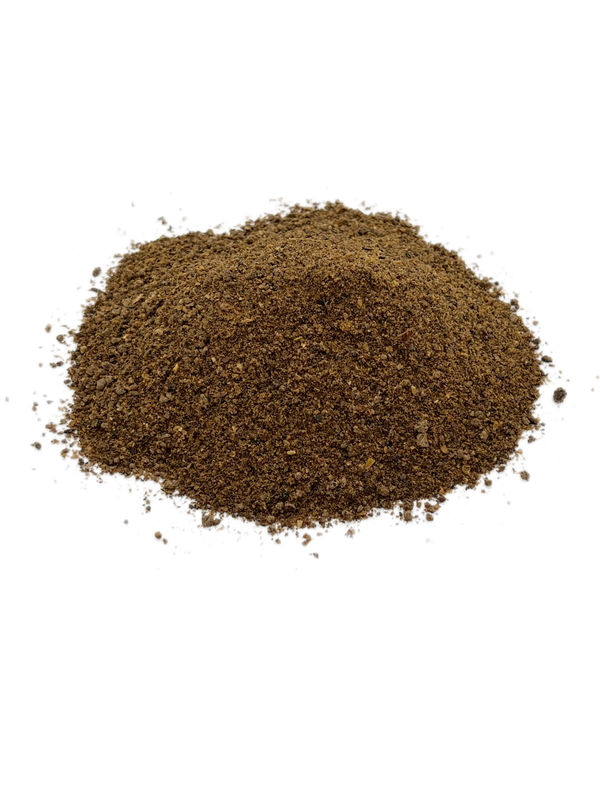
High Powered Organics Karanja Meal is a premium organic soil amendment produced from the seeds of the evergreen leguminous tree Pongamia pinnata. After the valuable oil is pressed from the seeds, the remaining material is dried, crushed and carefully graded to create a nutrient-rich amendment commonly known as Karanja Meal or Karanja Cake.
Highly valued by earthworms and beneficial soil microorganisms, Karanja Meal breaks down readily within biologically active growing media, contributing organic nutrition and carbon while supporting the soil food web.
Karanja is frequently compared with Neem Meal because the two amendments share several characteristics, but each has its own unique properties. They can also work exceptionally well together in living-soil programs.
One of Karanja Meal's major advantages is its suitability for Integrated Pest Management (IPM). When incorporated into or top dressed onto soil, it can help create less favourable root-zone conditions for problematic pests such as fungus gnats, while simultaneously providing valuable organic nutrition.
Unlike Neem Meal, which can have a pronounced aroma, Karanja Meal has only a mild, nutty smell, making it an especially attractive amendment for indoor gardens.
Key Features
- Premium Pongamia pinnata seed meal
- Also known as Karanja Cake
- Organic soil amendment
- Approximately 4.6% total nitrogen
- Contains phosphorus and potassium
- High organic carbon content
- 46.07% total organic carbon
- C:N ratio of approximately 10:1
- Excellent food source for soil microorganisms
- Highly attractive to earthworms
- Breaks down readily in biologically active soil
- Supports nutrient cycling
- Excellent for living soil
- Suitable for no-till cultivation
- Ideal for reusable soil
- Can be mixed directly into growing media
- Suitable for top dressing
- Useful component of an IPM program
- Helps manage soil conditions associated with fungus gnats
- Excellent companion to Neem Meal
- Much milder aroma than Neem
- Suitable for indoor and outdoor gardens
- Used as an ingredient within HPO GRO-DIRT
- Available in multiple sizes
What Is Karanja Meal?
Karanja Meal is produced from the seeds of Pongamia pinnata, an evergreen leguminous tree.
The seeds naturally contain valuable oils. During processing, this oil is pressed from the seed material.
The remaining seed cake is then:
Dried → Crushed → Graded → Packaged as Karanja Meal
Rather than being a waste product, this residual material is highly valuable to organic growers because it contains nitrogen, organic carbon and biologically active plant compounds.
When incorporated into living soil, microorganisms and earthworms progressively process the material and return its nutrients to the soil ecosystem.
Independent Nutritional Analysis
High Powered Organics provides detailed independent analysis for its Karanja Meal.
| Analysis | Result |
|---|---|
| Total Nitrogen (N) | 4.607% |
| Total Phosphorus (P) | 0.405% |
| Total Potassium (K) | 1.05% |
| Total Organic Carbon | 46.072% |
| pH – 1:5 Water | 5.31 |
| Electrical Conductivity | 4.089 |
| Moisture Content | 7.16% |
| Carbon:Nitrogen Ratio | 10:1 |
The relatively high nitrogen and organic carbon content makes Karanja Meal useful as both a nutritional amendment and biological soil food.
Natural Nitrogen for Living Soil
With approximately 4.6% total nitrogen, Karanja Meal provides a useful organic nitrogen source.
Nitrogen supports:
- Chlorophyll formation
- Healthy green foliage
- Vegetative development
- Amino acid formation
- Protein synthesis
- Enzyme activity
- Overall plant biomass
Unlike highly soluble synthetic nitrogen fertilisers, Karanja Meal relies heavily on biological decomposition and nutrient cycling within the growing medium.
This makes it particularly well suited to living-soil and organic cultivation systems.
Feeds the Soil Food Web
Karanja Meal isn't just about its NPK analysis.
High Powered Organics specifically identifies it as a material that is readily consumed and processed by earthworms and soil microorganisms.
In an active soil environment, the amendment provides organic material that can support:
- Beneficial microbial activity
- Decomposition
- Nutrient mineralisation
- Earthworm activity
- Organic matter cycling
- Rhizosphere development
- Long-term soil fertility
This makes Karanja particularly valuable in systems where growers want to feed the soil rather than rely exclusively on immediately soluble plant nutrients.
Excellent for Earthworms
Karanja Meal is particularly well suited to soil systems containing active earthworm populations.
Earthworms and microorganisms progressively process organic amendments, helping convert them into forms that become incorporated throughout the soil ecosystem.
This makes Karanja useful for:
- Living-soil containers
- No-till beds
- Raised beds
- Worm-rich garden soils
- Reusable organic media
- Compost-based growing systems
Karanja Meal for IPM
One of the most interesting uses for Karanja Meal is as part of a preventative Integrated Pest Management strategy.
Rather than waiting until a pest population becomes severe, growers can incorporate Karanja into their soil-management program.
High Powered Organics specifically identifies Karanja Meal as having soil IPM applications associated with problematic pests such as fungus gnats.
This makes it especially useful in living-soil environments where growers want to minimise dependence on harsher interventions.
Karanja should be viewed as one component of an IPM strategy rather than a guaranteed standalone treatment for an established infestation.
Fungus Gnat Management
Fungus gnats are particularly common in moist, organic growing media.
Their larvae occupy the upper layers of the growing medium, where they feed on organic material, fungi and potentially young root tissue.
Karanja Meal can be incorporated into a broader fungus gnat management strategy alongside:
- Appropriate irrigation practices
- Allowing suitable surface dry-back
- Good airflow
- Sticky monitoring traps
- Biological controls
- Mulch management
- Root-zone hygiene
Using multiple preventative strategies is generally more effective than relying on a single product.
Karanja Meal vs Neem Meal
Karanja and Neem are frequently mentioned together, and for good reason.
Both are seed-derived organic soil amendments with useful nutritional and IPM characteristics.
However, Karanja and Neem are not identical products.
| Karanja Meal | Neem Meal |
|---|---|
| Derived from Pongamia pinnata | Derived from Neem |
| Organic nutrient source | Organic nutrient source |
| Supports soil biology | Supports soil biology |
| Useful in IPM programs | Useful in IPM programs |
| Excellent soil amendment | Excellent soil amendment |
| Mild nutty aroma | Typically stronger aroma |
| Excellent for indoor use | Strong smell can be noticeable indoors |
| Can be combined with Neem | Can be combined with Karanja |
Rather than necessarily choosing one over the other, many living-soil growers use Karanja and Neem together to take advantage of their complementary characteristics.
A Major Advantage: Mild Aroma
Anyone who has worked extensively with Neem Meal knows its aroma can become noticeable—particularly inside enclosed growing environments.
Karanja Meal provides many similar soil-building characteristics while having a much milder smell.
High Powered Organics describes its aroma as mild and nutty.
This makes it an excellent choice for:
- Indoor gardens
- Grow tents
- Greenhouses
- Indoor living-soil beds
- Home gardens where strong amendment odours are undesirable
Application Rate
High Powered Organics recommends approximately:
125mL per 40L of soil
This is approximately half a cup per 40L of growing medium.
Karanja Meal can either be:
Mixed through the growing medium
or
Applied as a top dressing
Soil Mixing Guide
For preparing or re-amending growing media:
| Soil Volume | Approx. Karanja Meal |
|---|---|
| 10L | 31mL |
| 20L | 63mL |
| 40L | 125mL |
| 80L | 250mL |
| 100L | 313mL |
| 200L | 625mL |
Mix thoroughly throughout the growing medium for even distribution.
When combining Karanja with multiple other nitrogen-rich amendments, account for the total fertility of the complete soil recipe.
Top Dressing
Karanja Meal can also be used as a surface amendment.
Apply the appropriate quantity evenly across the soil surface rather than concentrating it directly against the plant stem.
For living-soil systems:
- Spread Karanja Meal evenly over the soil.
- Lightly work it into the upper layer where appropriate.
- Cover with organic mulch.
- Water normally.
- Allow soil organisms to process the amendment.
Because Karanja is an organic meal, its effects depend on biological decomposition rather than behaving like an instantly soluble fertiliser.
Excellent for Soil Re-Amendment
Karanja Meal is particularly useful when rebuilding fertility in previously used living soil.
Its combination of:
Organic Nitrogen + Carbon + Biological Feedstock + IPM Characteristics
makes it a versatile component of soil re-amendment recipes.
It can be combined with other organic and mineral amendments according to the requirements of the depleted soil.
Excellent for No-Till Growing
Karanja Meal is particularly suited to no-till cultivation, where the goal is to maintain a functioning soil ecosystem across multiple crop cycles.
Rather than removing and replacing the growing medium, growers can replenish fertility through surface-applied organic amendments.
Karanja can be top dressed beneath mulch, where moisture and biological activity progressively break it down.
This approach supports:
- Long-term soil fertility
- Earthworm activity
- Microbial populations
- Nutrient cycling
- Reduced soil disturbance
Use with ALFA-MULCH
After top dressing Karanja Meal, applying ALFA-MULCH can help maintain favourable conditions around the soil surface.
Mulching can help:
- Maintain consistent moisture
- Protect organic amendments
- Support microbial activity
- Encourage decomposition
- Reduce excessive surface disturbance
- Maintain an active upper soil layer
This is particularly useful in living-soil and no-till containers.
Use with GRO-DIRT
Karanja Meal is already part of the organic fertiliser package used within High Powered Organics GRO-DIRT Full Spectrum.
This makes standalone Karanja Meal an excellent option for growers wanting to:
- Re-amend used GRO-DIRT
- Supplement long-cycle soil
- Maintain no-till containers
- Build custom living-soil recipes
- Add additional Karanja to an IPM-focused soil program
Because GRO-DIRT already contains Karanja and numerous other amendments, additional applications should be made according to actual soil and plant requirements rather than automatically added to fresh media.
Karanja Meal + HERB-SUPERB
Karanja can also complement HERB-SUPERB in organic top-dressing and soil-building programs.
HERB-SUPERB provides a complex, stage-specific nutritional package, while Karanja allows growers to add an individual nitrogen-rich seed meal with additional soil and IPM benefits.
This provides more flexibility when customising a living-soil amendment program.
Karanja Meal + STONE-AGE
Pairing Karanja Meal with STONE-AGE provides a combination of organic and mineral inputs.
Karanja Meal
Contributes:
- Organic nitrogen
- Organic carbon
- Phosphorus
- Potassium
- Biological feedstock
- IPM support
STONE-AGE
Contributes broader mineral nutrition.
This combination can be useful when building or re-amending custom living soils where both organic fertility and mineral diversity are required.
Suitable Applications
High Powered Organics Karanja Meal is ideal for:
- Living soil
- Organic soil
- GRO-DIRT
- GRO-DIRT Lite
- No-till cultivation
- Raised beds
- Fabric pots
- Container gardens
- Vegetable gardens
- Flower gardens
- Indoor gardens
- Outdoor gardens
- Greenhouses
- Soil building
- Soil re-amendment
- Top dressing
- Compost systems
- IPM programs
Available Sizes
High Powered Organics Karanja Meal is available in:
- 500g
- 1kg
- 2.5kg
- 5kg
This provides suitable options for individual containers through to larger living-soil beds and soil-building projects.
Specifications
| Specification | Details |
|---|---|
| Brand | High Powered Organics |
| Product | Karanja Meal |
| Botanical Source | Pongamia pinnata |
| Product Type | Organic Seed Meal / Soil Amendment |
| Alternative Name | Karanja Cake |
| Total Nitrogen | 4.607% |
| Total Phosphorus | 0.405% |
| Total Potassium | 1.05% |
| Organic Carbon | 46.072% |
| C:N Ratio | 10:1 |
| pH – 1:5 Water | 5.31 |
| Moisture | 7.16% |
| General Application | 125mL per 40L soil |
| Top Dressing | Yes |
| Soil Mixing | Yes |
| Living Soil | Yes |
| No-Till | Yes |
| IPM Application | Yes |
| GRO-DIRT Ingredient | Yes |
| Available Sizes | 500g, 1kg, 2.5kg & 5kg |
Why Choose High Powered Organics Karanja Meal?
High Powered Organics Karanja Meal provides far more than basic organic nitrogen.
Derived from Pongamia pinnata seeds, it combines approximately 4.6% nitrogen with more than 46% organic carbon, creating an amendment that supplies nutrition while feeding the biological processes at the heart of living soil.
Earthworms and microorganisms readily interact with the material, making it particularly valuable for living soil, no-till beds and reusable growing media.
Its additional role within soil-based IPM programs makes Karanja even more versatile, particularly for growers concerned about pests such as fungus gnats.
And for indoor growers who like the properties of Neem but not its powerful smell, Karanja's mild nutty aroma is a significant advantage.
Mix it into fresh soil, use it when re-amending old soil or top dress it beneath mulch for an effective combination of organic fertility, biological support and preventative soil management.
FAQs
What is Karanja Meal?
Karanja Meal is the dried, crushed material remaining after oil is pressed from the seeds of Pongamia pinnata. It is also commonly called Karanja Cake.
What is the nutrient analysis?
Independent analysis shows approximately 4.607% nitrogen, 0.405% phosphorus and 1.05% potassium.
How much organic carbon does it contain?
The analysed product contains approximately 46.072% total organic carbon.
What is the carbon-to-nitrogen ratio?
The analysed C:N ratio is approximately 10:1.
How much Karanja Meal should I use?
A general application is approximately 125mL, or half a cup, per 40L of soil.
Can I top dress with Karanja Meal?
Yes. It can either be mixed throughout growing media or applied as a top dressing.
Is Karanja Meal suitable for living soil?
Yes. It is particularly well suited to living-soil systems because earthworms and soil microorganisms readily process the organic material.
Can I use it in no-till soil?
Yes. Karanja is an excellent amendment for reusable no-till beds and containers.
Does Karanja Meal help with fungus gnats?
Karanja is used as part of soil-based Integrated Pest Management programs and can help create less favourable conditions for problematic pests such as fungus gnats. For active infestations, combine it with appropriate cultural, monitoring and biological controls.
Is Karanja the same as Neem Meal?
No. They are produced from different plants, although they have several similar properties and are commonly used together.
Does Karanja Meal smell like Neem?
No. Karanja generally has a much milder, slightly nutty aroma, making it particularly convenient for indoor growing.
Can Karanja and Neem be used together?
Yes. The two amendments can complement one another in organic soil and IPM programs.
Is Karanja Meal already used in GRO-DIRT?
Yes. Karanja Meal is one of the organic fertiliser ingredients used within GRO-DIRT Full Spectrum.
What sizes are available?
High Powered Organics Karanja Meal is available in 500g, 1kg, 2.5kg and 5kg.