



Description
Aussie Mushroom Ready to Grow Kit – Gourmet Mushroom Growing Kit
Grow fresh gourmet mushrooms at home with an Aussie Mushroom Ready to Grow Kit, a beginner-friendly mushroom growing system that arrives pre-inoculated and ready to fruit.
Instead of preparing substrate, sterilising equipment or inoculating mushroom spawn yourself, the hard work has already been done. Simply prepare the kit according to the instructions, provide the appropriate temperature, humidity, fresh air and indirect light, and watch your mushrooms develop.
With a wide selection of gourmet and specialty mushroom varieties available, Aussie Mushroom Kits are an excellent introduction to home mushroom cultivation and make a unique gift for gardeners, food lovers and anyone interested in growing their own produce.
Available Mushroom Varieties
Choose from a range of ready-to-grow varieties, including:
- White Oyster
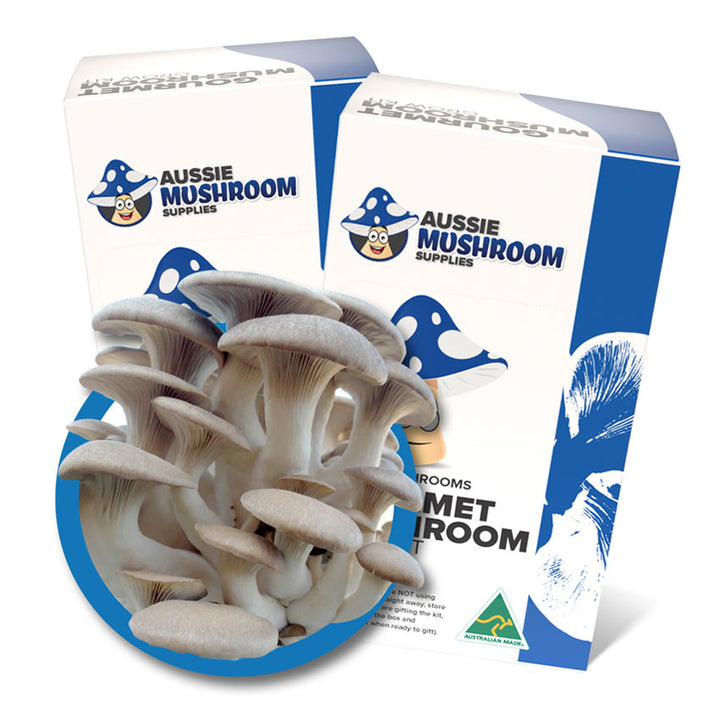
- Grey Oyster
- Tan Oyster
- Pink Oyster
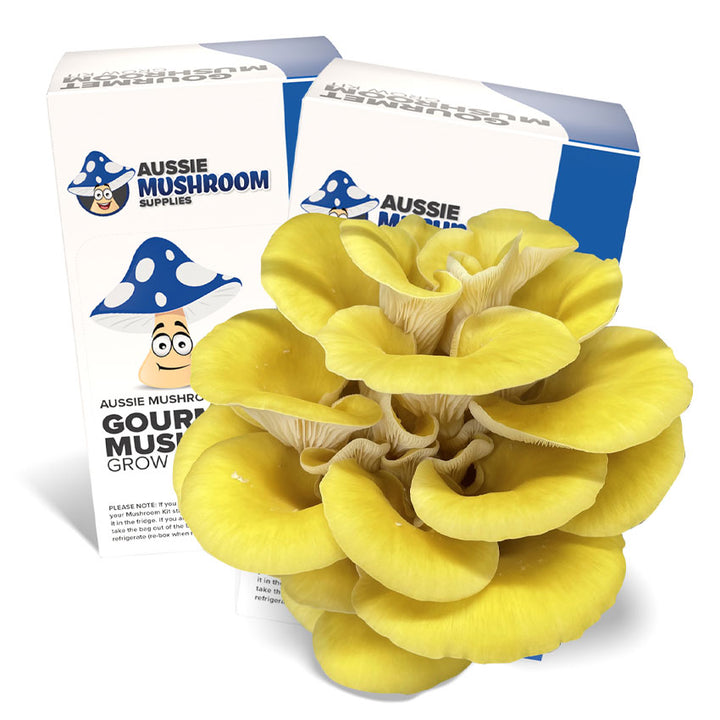
- Yellow Oyster
- King Oyster
- Lion's Mane
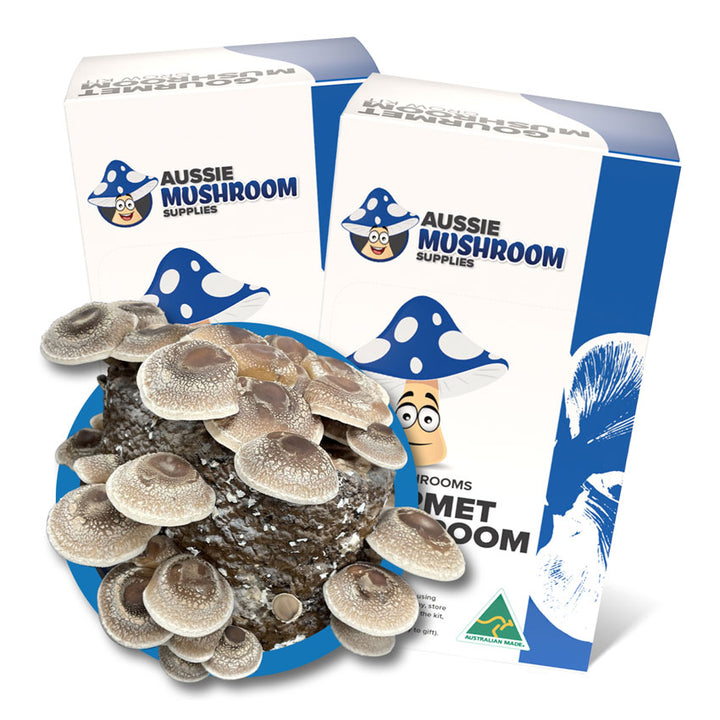
- Shiitake
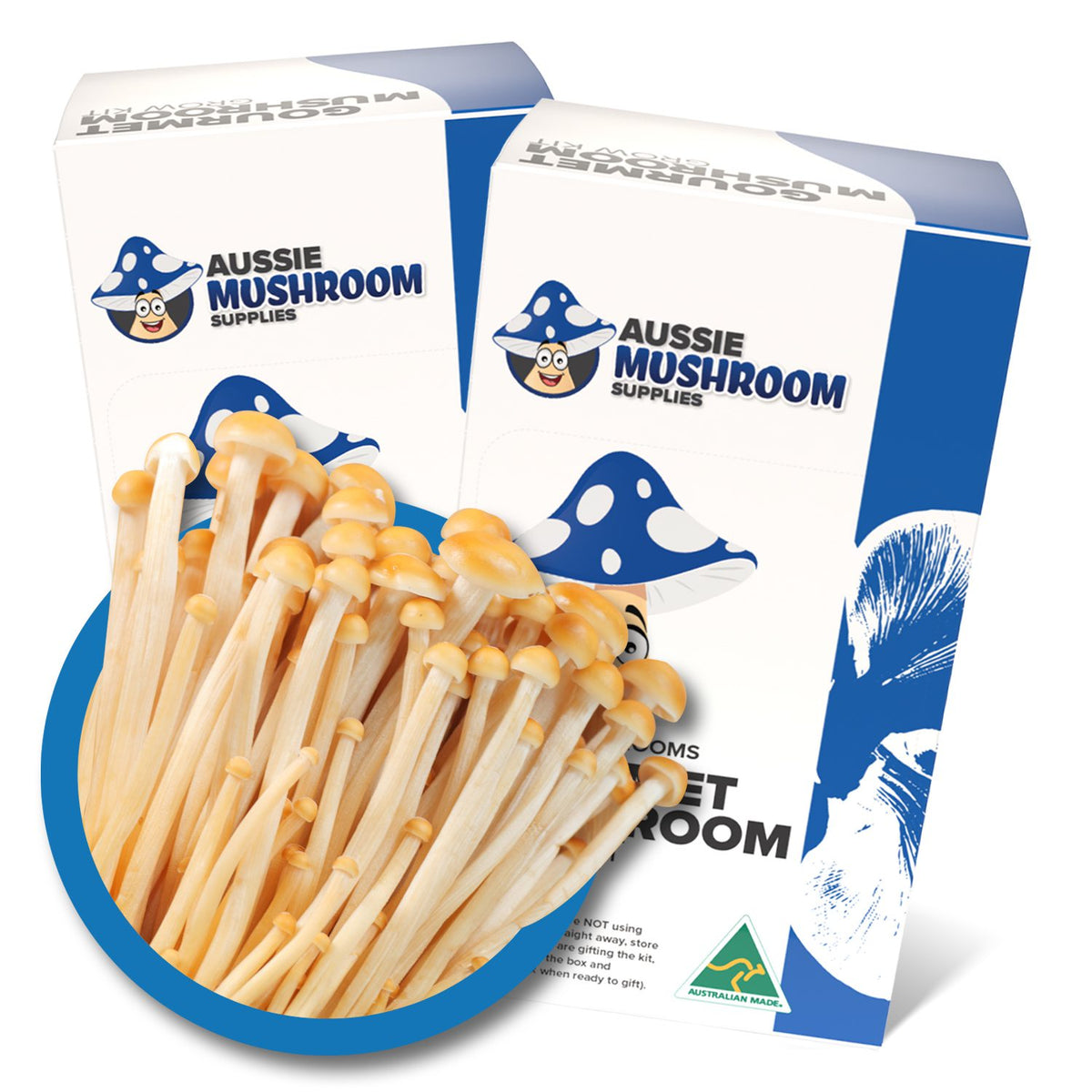
- Enoki
- Nameko
- Sword Belt
- Australian Reishi
- Australian Turkey Tail
Availability may vary depending on production cycles and season.
Key Features
- Australian-made ready-to-grow mushroom kit
- Pre-inoculated mushroom substrate
- Fully prepared for the fruiting stage
- No substrate preparation required
- No sterilisation required before starting the kit
- No inoculation required
- Beginner-friendly mushroom growing
- Multiple gourmet and specialty varieties available
- Suitable for home cultivation
- Can produce multiple flushes under suitable conditions
- Compact indoor growing project
- Educational and interactive
- Great gift for gardeners and food enthusiasts
- Instructions included
- Ideal introduction to mushroom cultivation
- Spent substrate can be returned to the garden or composted
Skip the Difficult Part of Mushroom Growing
Starting mushroom cultures from scratch can involve considerably more equipment and preparation than growing ordinary plants.
Depending on the cultivation method, growers may need to manage:
- Sterile technique
- Mushroom cultures
- Grain spawn
- Substrate preparation
- Pasteurisation or sterilisation
- Inoculation
- Colonisation
- Contamination control
An Aussie Mushroom Ready to Grow Kit skips these earlier stages.
The supplied substrate has already been inoculated and colonised, allowing you to begin with the much more exciting stage: fruiting your mushrooms.
Simple Home Mushroom Growing
The basic process is straightforward:
Prepare → Provide Humidity → Maintain Fresh Air → Watch for Pins → Grow → Harvest
Exact preparation varies between mushroom species, so always follow the instructions supplied with your particular variety.
Step 1 – Prepare Your Kit
Open and prepare the mushroom kit according to the instructions for the selected species.
Different mushrooms can require different fruiting methods, so don't assume every variety should be opened or cut in exactly the same way.
Step 2 – Choose a Suitable Location
Place the kit somewhere with suitable temperature conditions and soft, indirect or shaded light.
Mushrooms should not simply be placed in a completely dark cupboard.
Step 3 – Maintain Humidity
Mushrooms require a humid fruiting environment.
Mist as directed to maintain appropriate moisture without continually soaking developing mushrooms.
Step 4 – Provide Fresh Air
Fresh-air exchange is important during mushroom development.
Insufficient fresh air can affect fruiting and mushroom shape.
Step 5 – Watch for Pinning
Small mushroom formations known as pins begin appearing as the block enters fruiting.
These pins develop rapidly under suitable conditions.
Step 6 – Grow & Harvest
Allow the mushrooms to mature according to the characteristics of your selected variety, then harvest at the appropriate stage.
Multiple Flushes from One Kit
One of the best features of a mushroom grow kit is that the first harvest doesn't necessarily mean the block is finished.
Under suitable conditions, the colonised substrate can produce multiple flushes.
After harvesting, the block can be rested and prepared for another fruiting cycle according to the instructions for that mushroom variety.
Each successive flush consumes more of the substrate, so it is normal for the block to gradually become smaller and eventually stop producing.
White Oyster
White Oyster mushrooms are an excellent choice for beginners.
Oyster mushrooms are vigorous fruiters and form attractive clusters of overlapping caps.
Their relatively straightforward fruiting behaviour makes White Oyster a strong option for customers purchasing their first mushroom kit.
Grey Oyster
Grey Oyster mushrooms produce classic oyster-shaped clusters with attractive grey caps.
They are another approachable option for home cultivation and an excellent culinary mushroom.
Tan Oyster
Tan Oyster mushrooms produce clusters of tan-coloured fruiting bodies and offer another variation on the popular oyster mushroom growing experience.
Pink Oyster
Pink Oyster mushrooms stand out for their vivid colour and vigorous growth.
They favour warmer fruiting conditions than many other varieties, making temperature particularly important when choosing this kit.
Pink Oyster kits are also different from many of the other varieties when it comes to storage, so they should be started promptly rather than treated as a kit that can simply be held refrigerated for an extended period.
Yellow Oyster
Yellow Oyster mushrooms produce striking yellow fruiting bodies and are one of the most visually distinctive varieties in the range.
Their appearance makes them particularly rewarding for first-time mushroom growers and gift recipients.
King Oyster
King Oyster mushrooms are prized for their substantial stems and dense texture.
Their growth habit differs noticeably from the clustered appearance of many other oyster varieties, making them an interesting option for growers wanting something different.
Lion's Mane
Lion's Mane produces distinctive white cascading growth rather than a conventional mushroom cap and stem.
Its unusual appearance makes Lion's Mane one of the most fascinating varieties to watch develop at home.
Shiitake
Shiitake is one of the world's best-known culinary mushrooms.
The ready-to-grow format provides a convenient way to experience fruiting Shiitake without preparing and inoculating your own substrate.
Shiitake fruiting preparation differs from basic oyster mushroom kits, so follow the supplied instructions carefully.
Enoki
Enoki is a cool-loving mushroom variety.
Environmental temperature is especially important with this kit, making it particularly suited to cooler seasonal conditions.
Nameko
Nameko is another distinctive gourmet mushroom option for growers wanting to explore varieties beyond the familiar oyster and Shiitake mushrooms.
Australian Reishi
Australian Reishi provides an opportunity to grow an Australian Ganoderma variety at home.
Unlike the familiar culinary oyster varieties, Reishi is generally grown as a specialty or functional mushroom rather than as an everyday cooking mushroom.
Australian Turkey Tail
Australian Turkey Tail produces distinctive layered fruiting bodies and provides another specialty mushroom option within the Aussie Mushroom range.
As with Reishi, its intended use differs from conventional culinary mushroom varieties.
Choosing the Right Mushroom Kit
Different mushroom species prefer different environmental conditions.
Rather than selecting purely by appearance, consider the temperature of the location where the kit will be grown.
| Variety | General Characteristic |
|---|---|
| White Oyster | Beginner-friendly gourmet oyster |
| Grey Oyster | Classic oyster mushroom |
| Tan Oyster | Gourmet tan oyster |
| Pink Oyster | Warm-climate oyster |
| Yellow Oyster | Colourful gourmet oyster |
| King Oyster | Thick-stemmed gourmet variety |
| Lion's Mane | Distinctive cascading fruiting body |
| Shiitake | Classic gourmet mushroom |
| Enoki | Cool-condition variety |
| Nameko | Specialty gourmet mushroom |
| Sword Belt | Specialty mushroom variety |
| Australian Reishi | Specialty Ganoderma |
| Australian Turkey Tail | Specialty mushroom |
Environmental requirements vary by species, so use the instructions for the selected kit rather than applying one temperature target to every variety.
Humidity Is Important
Mushroom fruiting bodies contain a large amount of water, making adequate humidity important throughout development.
The aim is to maintain a humid microclimate around the fruiting block without creating unnecessarily stagnant or waterlogged conditions.
Depending on the supplied instructions and growing environment, this can involve misting the appropriate surfaces one or more times per day.
Once mushrooms are actively developing, avoid unnecessarily saturating the fruiting bodies.
Mushrooms Need Fresh Air
Humidity alone isn't enough.
Developing mushrooms also require fresh-air exchange.
An enclosed environment that maintains very high humidity but receives insufficient fresh air can result in poor fruiting characteristics.
Successful mushroom cultivation therefore involves balancing:
Humidity + Fresh Air + Temperature + Light
Do Mushroom Kits Need Light?
Mushrooms don't photosynthesise like plants, but that doesn't mean every mushroom kit should be grown in complete darkness.
A suitable location generally provides soft or shaded light without harsh direct sunlight.
A practical guideline is an area with enough ambient light to comfortably read.
Avoid placing the fruiting kit directly underneath intense grow lights or in strong direct sunlight unless specifically directed for the variety.
Temperature Matters
Temperature can have a major influence on mushroom fruiting.
This is particularly important when comparing varieties such as Pink Oyster, which prefers warmer conditions, with Enoki, which performs better under cooler conditions.
If you're growing mushrooms during a hot Australian summer, selecting a warm-tolerant variety may be considerably easier than attempting to force a cool-season mushroom to fruit outside its preferred range.
Likewise, cooler winter conditions can create opportunities for varieties that are difficult to fruit during summer.
Storage Before Use
If you're not ready to begin immediately, many varieties should be refrigerated to slow their development until you're ready to start.
This is especially useful when purchasing a kit as a gift.
However, storage requirements vary between species.
Pink Oyster should not be treated like the refrigerated varieties and is best started promptly.
Always follow the storage instructions supplied with the selected mushroom kit.
Great for Beginners
You don't need a laboratory or previous mushroom cultivation experience to start with a ready-to-grow kit.
Because the culture, inoculation and substrate colonisation stages have already been completed, these kits provide a much easier entry point into mushroom growing.
They're excellent for:
- First-time mushroom growers
- Home gardeners
- Food enthusiasts
- Families
- Educational projects
- Gardeners interested in fungi
- Gourmet cooks
- Unique gifts
- Customers considering more advanced mushroom cultivation
From Grow Kit to Advanced Mushroom Cultivation
Ready-to-grow kits can also provide an introduction to the mushroom lifecycle before moving into more advanced cultivation.
Growers who become interested in the process can later explore:
- Mushroom spawn
- Sterilised substrates
- Grain spawn
- Agar
- Liquid culture
- Mushroom grow bags
- Monotubs
- Humidity control
- Fresh-air exchange
- Laboratory equipment
- DIY substrate preparation
The ready-to-grow kit lets beginners understand fruiting conditions first, without simultaneously having to master sterile culture work.
After Your Final Harvest
Once the block has produced its useful flushes, the remaining mushroom substrate doesn't necessarily need to go straight into general waste.
Spent mushroom substrate can be added to an appropriate:
- Compost system
- Garden bed
- Organic garden
- Soil-building project
The block naturally breaks down as the mushroom mycelium consumes its available food source.
Why Choose an Aussie Mushroom Ready to Grow Kit?
The Aussie Mushroom Kit takes one of the most technical parts of mushroom cultivation and does it for you.
Instead of starting with spores, cultures and raw substrate, you receive a prepared, colonised mushroom block ready for the fruiting process.
That makes these kits particularly attractive for people who want to experience growing and harvesting their own mushrooms without immediately investing in specialist cultivation equipment.
With varieties ranging from colourful Pink and Yellow Oysters through to Lion's Mane, Shiitake, Enoki, Reishi and Turkey Tail, there's also plenty of opportunity to experiment with different mushroom species and growing conditions.
Frequently Asked Questions
Is the Aussie Mushroom Kit suitable for beginners?
Yes. Ready-to-grow kits are specifically useful for beginners because the inoculation and colonisation stages have already been completed.
Is the kit already inoculated?
Yes. The substrate arrives inoculated and colonised, ready for the fruiting stage.
Do I need mushroom spores?
No. You don't need to purchase spores or culture to use a ready-to-grow kit.
Do I need to sterilise substrate?
No. Substrate preparation and inoculation have already been completed.
Do I need special equipment?
Basic fruiting generally requires suitable environmental conditions and a way to maintain humidity. Follow the instructions supplied with your particular mushroom variety.
How quickly will mushrooms grow?
Under suitable conditions, some ready-to-fruit kits can begin producing mushrooms within roughly one to two weeks, although timing varies significantly with species, temperature and environmental conditions.
Can I harvest more than once?
Potentially, yes. A healthy block can produce multiple flushes, although yields generally decline as the substrate is consumed.
Should I keep my kit in the dark?
No. Fruiting mushrooms generally benefit from soft ambient or shaded light. Avoid strong direct sunlight.
Should I refrigerate the kit before starting?
Many varieties can be refrigerated if they won't be started immediately. Pink Oyster is an important exception and should be started promptly rather than refrigerated.
Which mushroom is good for warmer conditions?
Pink Oyster is specifically suited to warmer fruiting conditions.
Which variety likes cooler conditions?
Enoki is particularly associated with cooler fruiting conditions.
Can I eat every variety in the same way?
No. The range includes both familiar gourmet culinary mushrooms and specialty/functional varieties such as Reishi and Turkey Tail. Use each species appropriately.
Can I compost the block afterwards?
Yes. Once production has finished, spent mushroom substrate can generally be composted or incorporated into an appropriate garden environment.
What happens if I see green mould?
Green mould can indicate contamination. Don't assume unusual green growth is normal mycelium. Isolate the affected kit from other mushroom cultures and contact the retailer or manufacturer for guidance rather than opening it around a mushroom-growing area.